
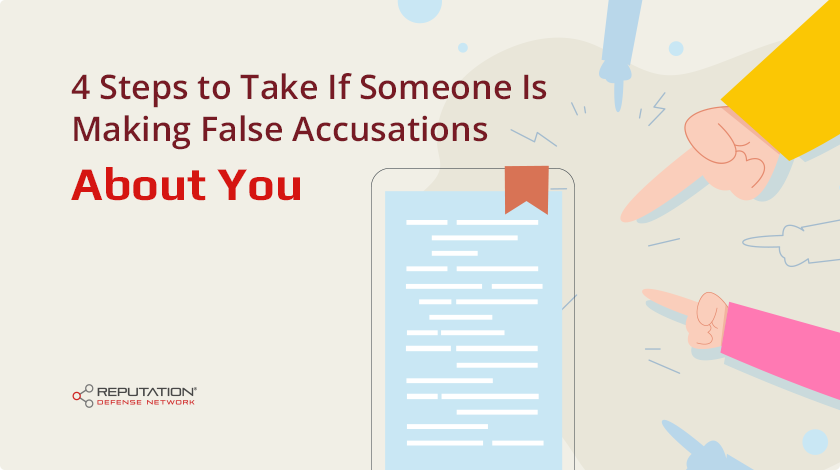
If someone is making false accusations about you online, work through four steps in order. Document everything first, with screenshots, URLs and dates, before the content can be edited or deleted. Resist responding publicly while you assess how far it has actually spread. Report it through the platform’s own process, or ask the site owner to correct or remove it. Then build and strengthen pages you control so accurate information outranks the accusation. Legal action is a narrow option: it works only when a statement is provably false, presented as fact rather than opinion, and causing real harm.
Finding false information about yourself online usually happens in predictable ways. You search their own name, get tagged in a post, or a friend sends a screenshot asking you if you’ve seen the unfortunate post or article. The first reaction is rarely calm. Panic, anger, and the urge to respond right away all show up within a few minutes.
That urge to fire off a reply immediately is understandable, but it is usually the wrong move. What matters much more than any single action is the order in which those actions happen. Enacting the four steps to take if someone is making false accusations online starts with understanding how to tell whether what you are looking at is false, defamatory, or simply an opinion someone is entitled to hold. From there, you can move through the correct action based on the offending content.
Is It False, Is It Defamation, or Is It Just an Opinion?
Before taking any action, it helps to know what category the content actually falls into, because the right response depends on it.
Opinions are protected speech, even when they are harsh or unfair. A statement such as “the service was terrible” or “I would not recommend working with this person” reflects someone’s subjective view and generally cannot be challenged as false, even if it stings.
False statements of fact are different. If someone publishes something untrue that damages your reputation, it may qualify as defamation. Courts generally look at four elements:
- A false statement of fact, not opinion.
- Published or communicated to at least one other person.
- Made with at least negligence regarding its truth.
- Caused actual harm to reputation.
Public figures face a higher bar than private individuals as they generally must show the statement was made with actual malice, meaning the person knew it was false or acted with reckless disregard for the truth.
Understanding how the malice standard works in practice and which category applies does not require a law degree, but it shapes everything that follows. A false statement of fact opens the door to formal remedies, while an opinion generally does not, no matter how damaging it feels.
How to Remove False Information Online
Once you have a sense of what you are dealing with, the next step is to determine what to actually do about it. The action taken is most effective in a specific order, because doing them out of sequence, especially responding publicly before documenting anything, can make the situation harder to resolve.
Step 1: Save Everything Before You Do Anything Else
Before contacting anyone, document what exists right now. Content on social media and websites can be edited or deleted quickly, sometimes within minutes of being posted, so evidence needs to be captured immediately.
- Take screenshots of the post itself, including the username, the date and timestamp, and any visible engagement counts such as likes, shares, or comments.
- Save the direct URL to the post or page, not just a link to the person’s profile.
- Capture surrounding comments or reposts that show how far the content has spread, since this will matter later if you need to demonstrate reach or harm.
- For content that might get deleted before you can act, the Wayback Machine can archive a page and preserve a timestamped copy.
This step applies whether the situation involves a single post or something spreading across multiple accounts. Documenting now gives you options later that will be unavailable to you if the content disappears first.
Step 2: Report It Through the Platform First
Every major platform has a reporting system, and it is worth using even though it rarely produces a fast result. Use the report function on the post itself, choose the violation category that best matches the content, such as harassment, false information, or impersonation, and include brief, factual context explaining why it is false.
Set realistic expectations here as platform reporting is often slow, and some reports result in no action at all. Even so, it is a documented, good faith step that matters later, since it shows you attempted the simplest resolution first before pursuing anything more formal. When platform reporting alone does not resolve things, there are more direct removal options worth exploring.
Step 3: Don’t Make It Worse
A few common reactions tend to backfire, and it helps to know them in advance.
- Do not argue publicly in the comments or in a separate post. Platform algorithms reward engagement, so a public back and forth can spread the original content to a wider audience instead of containing it.
- Do not post a public threat of legal action, because it rarely changes the other person’s behavior, and it can make you look reactive instead of measured
- Do not delete your own accounts or posts related to the situation. Doing so can erase context and evidence you may need later, including replies or timestamps that support your side of events
There is a well-known pattern behind why loud public responses tend to backfire, known as the Streisand effect, which occurs when an attempt to suppress or hide something ends up drawing far more attention to it than if it had been left alone. Staying quiet and documenting instead of reacting publicly protects your position far better than a fast public rebuttal does.
Step 4: Know When to Bring in a Professional
Some situations are manageable on your own, but others are not. Recognizing the difference early saves time. Consider bringing in a professional when:
- The content keeps spreading across new accounts or platforms despite your efforts.
- It is already affecting your job, business relationship, or an ongoing opportunity.
- The person posting is anonymous and platform reporting has not worked.
- A cease-and-desist letter was sent and ignored.
At that point, an online reputation management service built for individuals can take over the coordination, legal referrals, and search visibility work that becomes difficult to manage alone.
What to Do If Someone Is Making False Accusations About You
Some false content is more urgent than others. Accusations involving criminal behavior, professional misconduct, or personal wrongdoing tend to move faster and carry higher stakes than a vague negative comment, because they can affect employment, licensing, or legal standing almost immediately.
If you are dealing with this sort of accusation, document it the same way described above, but also take note of who saw it. Was it posted publicly, sent to a specific group, or shared with your employer or professional network? Identifying the audience matters because it affects both the potential harm and the evidence needed to support a legal claim later.
This category of content also tends to overlap with online harassment, particularly when the accusations are repeated, sent directly to people in your life, or paired with other targeting behavior. Recognizing that overlap early helps you understand the full scope of what you are dealing with.
What to Do When Someone Is Slandering You Online
People regularly use the term slander loosely to describe any false statement online, but the term technically refers to spoken defamation. Written defamation, including posts, comments, articles, and reviews, is legally called libel. Most online content falls under libel even when people call it slander in casual conversation.
When a false statement rises to the level of defamation, a cease and desist letter is often the first formal legal step. This is a written demand, sent by an attorney as opposed to by you directly, that identifies the false statement and requests it be removed or corrected. It carries more weight coming from a lawyer, since it signals that legal action could follow if the request is ignored.
Can You Sue Someone for Lying About You on the Internet?
Yes, under defamation law, if the statement was false, was published to someone else, and caused you actual harm. That said, it helps to have realistic expectations going in.
Lawsuits take time and money, oftentimes more of both than people expect. Statutes of limitations are short and vary significantly from state to state, so waiting too long to act can close off legal options entirely. And if the person posting is anonymous, you generally cannot even name them as a defendant until you go through a John Doe lawsuit and subpoena the platform for identifying information.
None of this means legal action is not worth pursuing, but it does mean going in with a clear picture of the process helps set expectations correctly from the start.
When the Poster Is Anonymous
Anonymous accusations are especially frustrating because there is no one to contact directly. Unmasking an anonymous poster generally works in stages. An attorney first subpoenas the platform for any identifying information tied to the account, such as an email address or IP address. That information can then lead to a subpoena of the person’s internet service provider, which may be able to connect an IP address to an actual name and address.
This is not a process you can complete on your own as it requires legal counsel with experience filing these subpoenas correctly, since platforms and internet service providers generally will not release identifying information without one.
If Removal Isn't Possible, What Comes Next
Sometimes a post just will not come down. The platform declines to act or the person who posted it will not cooperate. The content may not clearly meet any removal policy even though it feels unfair, and when that happens, suppression becomes the practical fallback.
Suppression embodies building and promoting accurate, positive content about you to outrank the false post in search results over time. It does not delete anything, but it changes what someone sees first when they search your name, which is often what matters most in practice. This is where ongoing search visibility work becomes useful, alongside a broader strategy for addressing content that will not come down through removal alone.
Frequently Asked Questions
A few questions come up often enough to answer directly here.
How long do I have to take legal action over a false post?
This depends entirely on your state, since statutes of limitations for defamation vary and are often shorter than people expect. Speaking with an attorney early preserves your options instead of risking a missed deadline.
Can I get Google to remove a page even if the site won’t take it down?
In limited cases, yes, particularly when the content violates Google’s own policies around personal information or clearly defamatory content. In most cases, though, Google will point back to the source site, which is why removal at the source is usually the stronger first target.
What if the person deletes the post before I take a screenshot?
Archived versions may still exist through tools like the Wayback Machine, and platforms sometimes retain records even after a post is removed. This is exactly why documenting quickly, before anything changes, matters as much as it does.
Does it matter if the post has only a few views?
It can affect how a claim is evaluated, since harm is part of what needs to be shown in a defamation case. That said, low visibility today does not mean it stays that way, so it is worth documenting and monitoring even if the current reach seems small.
Schedule a Confidential Reputation Review
The order of operations here matters more than any single step on its own. It’s important to preserve the evidence before reporting through the platform, all while resisting the urge to respond publicly. When necessary, escalate to a professional, and suppress what cannot be removed. Handled in that order, most situations become far more manageable than they feel in the first panicked hour.
If you are dealing with false information or accusations online right now, a confidential reputation review can help you understand exactly where things stand and what options genuinely apply to your situation.

RDN is dedicated to helping businesses of all size make informed decisions. We adhere to strict editorial guidelines our content meets and maintains our high standards.
Prefer RDN in your Google results? Add us as a preferred source on Google.
Related Articles
How Much Does News Article Removal Cost? 2026 Pricing
Published on October 8, 2026
By Scott Bates · Reviewed by Lamont S. News article...
Content Removal Services: How They Work and What They Cost
Published on October 7, 2026
By Scott Bates · Reviewed by Lamont S. Content removal...
News Article Removal: What Google Will Actually Delete
Published on October 7, 2026
By Scott Bates · Reviewed by Lamont S. Google will...